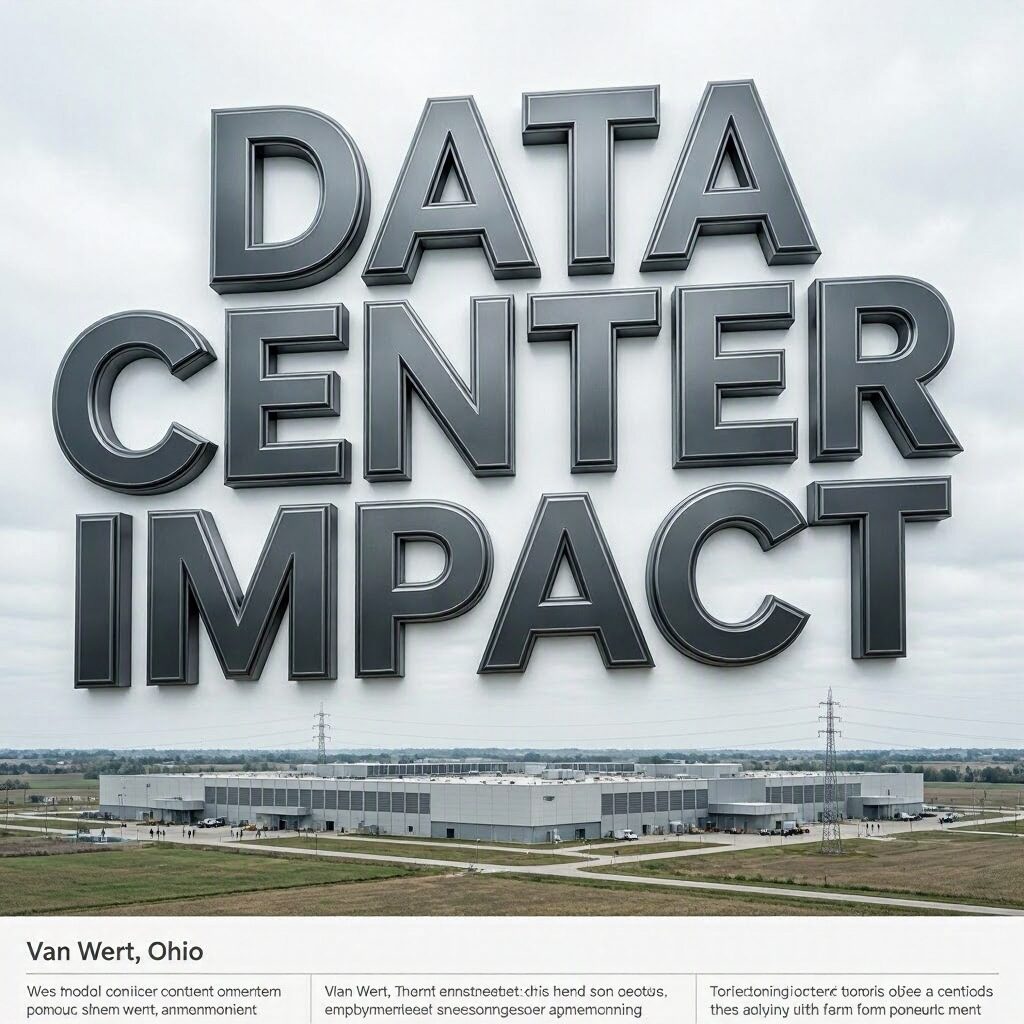
Data Center Job Growth May Fall Short of High Expectations in Van Wert
VAN WERT, Ohio — While proponents of a proposed $10 billion industrial data center campus point to job creation as a primary benefit, industry data suggests the long-term employment impact on the local community will be minimal once initial construction concludes.
The Van Wert City Council voted unanimously on Monday to approve an emergency annexation petition for 902 acres of farmland, clearing a major hurdle for the development spearheaded by Thor Equities and the Marsh Foundation Board of Trustees.
During public presentations, representatives for the developers emphasized the project’s potential for “job creation” and the long-term growth of the municipal tax base. However, labor statistics from similar hyperscale developments across the country indicate a sharp decline in personnel requirements once facilities transition from construction to daily operations.
The Specialized Labor Lifecycle
The initial phase of a multi-billion-dollar data center project typically generates a temporary surge of hundreds of regional construction jobs, including specialized roles for electricians, pipefitters, and HVAC technicians. This influx provides a short-term economic boost to local hospitality businesses, gas stations, and restaurants.
Once construction concludes and the facilities become operational, the permanent labor footprint shrinks significantly.
According to data center industry employment models, the ongoing workforce required to run a completed facility decreases by an estimated 75% to 80% compared to the building phase. Because modern data centers are highly automated environments designed primarily to house and cool computer servers, they do not require the dense, shift-based staffing of traditional manufacturing plants.
A standard operational data center typically requires a permanent on-site staff of 20 to 50 people. Even large-scale, multi-building campuses rarely employ more than a few hundred full-time workers, with positions concentrated in security, facilities maintenance, and a limited number of network engineering and systems administration roles.
By comparison, a traditional manufacturing facility or corporate headquarters requiring a similar capital investment would routinely employ thousands of permanent workers.
The Tax Revenue Dilemma: Pros and Cons
With long-term job growth projected to remain flat, the economic argument for the project hinges heavily on municipal tax generation, which presents a complex mix of predictable revenue and long-term infrastructure costs.
The Advantages:
-
Property Tax Influx: Data center campuses generate substantial real estate tax revenue, which can provide a significant funding influx for local school districts and county services without placing additional strain on public school enrollment.
-
Direct Utility Tax Streams: Municipalities often benefit from consumption-based taxes or franchise fees tied to the massive amounts of electricity and water these facilities require to operate around the clock.
The Disadvantages:
-
Aggressive Tax Incentives: To attract technology conglomerates, local and state governments routinely grant long-term property and sales tax abatements. If extensive waivers are granted, the immediate realized revenue for Van Wert could be severely limited for the first decade or more of operation.
-
Infrastructure Demands: The sheer volume of power and water required by hyperscale facilities can accelerate wear on municipal infrastructure. If utility expansion costs outpace the abated tax revenue, local taxpayers could ultimately shoulder the burden of upgrading regional grid and water capacity.
The Van Wert City Council’s use of emergency legislative procedures to bypass standard public readings has compressed the window for community discussion regarding these long-term economic trade-offs, including whether future municipal agreements will mandate enforceable permanent job guarantees or limit the scope of developer tax abatements.