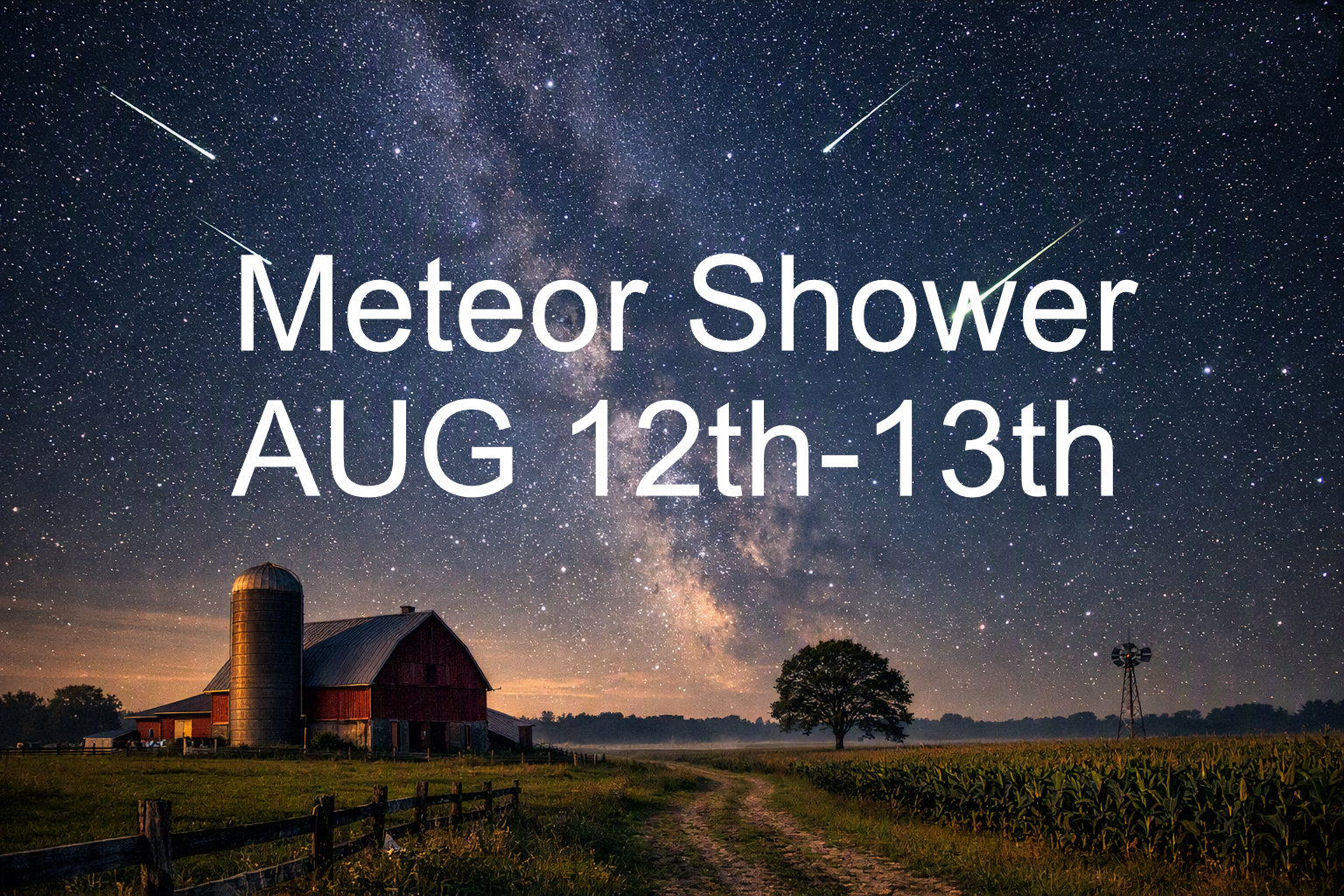
Residents across Northeast Indiana will have a clear view of one of the year’s most reliable sky shows as the Perseid meteor shower reaches its annual peak overnight Aug. 12–13. The event occurs when Earth moves through the densest portion of a long‑standing stream of debris left behind by Comet Swift‑Tuttle. As those fragments enter the atmosphere at roughly 37 miles per second, they burn up and produce fast, bright streaks of light. Larger pieces can generate brief fireballs.
Astronomers note that this year’s timing is favorable. The peak coincides with a new moon, eliminating moonlight that often washes out fainter meteors. Under dark‑sky conditions, observers may see dozens of meteors per hour, with the highest rates occurring after midnight as the constellation Perseus rises higher in the northeastern sky.
Local visibility will depend on cloud cover and light pollution, but rural areas across Adams, Wells, and Allen counties typically offer unobstructed views. Experts recommend giving eyes 20–30 minutes to adjust to the darkness and watching a wide portion of the sky rather than focusing on the radiant point.
The Perseids remain active for several weeks each summer, but the overnight period of Aug. 12–13 is expected to deliver the strongest activity for viewers in Northeast Indiana.