
VAN WERT, OHIO — To understand what is truly at stake in the industrial annexation of 902 acres of Van Wert farmland, one must look beyond the sterile columns of a corporate balance sheet. You have to look at a photograph of George H. Marsh, the 19th-century industrialist whose final will and testament established a pastoral, therapeutic sanctuary designed explicitly to protect, house, and educate orphaned, needy, and disabled children.
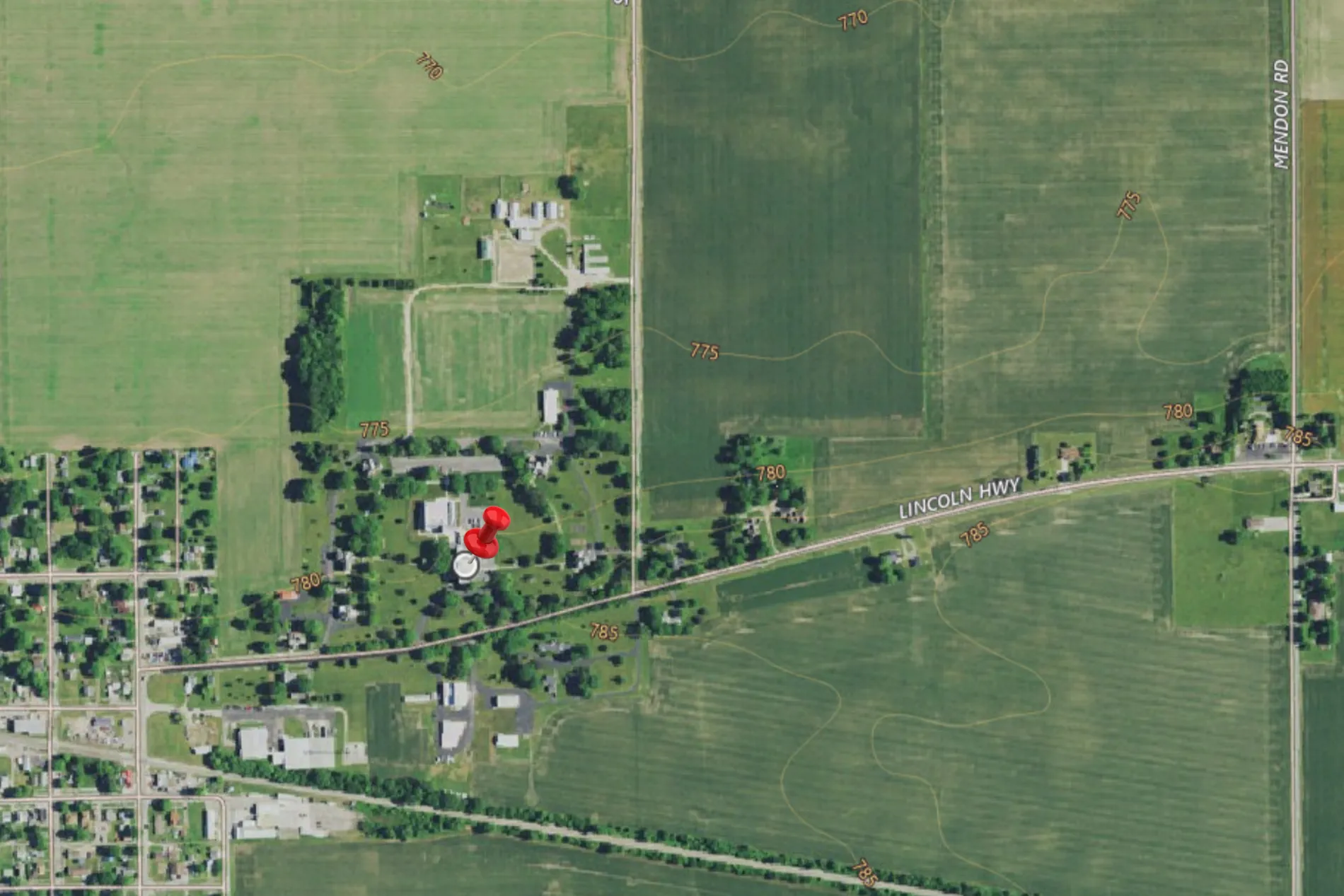
For nearly a century, the Marsh Foundation has stood as a quiet moral anchor for the county—a sprawling refuge of timber, crop fields, and equine facilities where vulnerable youth can heal alongside nature.
But on the evening of May 11, 2026, that century-old philanthropic legacy collided head-on with a proposed $10 billion data center development. During a tense public comment session overseen by Judiciary and Annexation Committee Chairman Eric Hurless—presiding over the chambers as President Pro Tem—local residents stepped to the microphone to argue that the city council wasn’t just reshaping local zoning law; they were breaking a sacred trust with the dead to accommodate the noisy infrastructure of the digital age.
“Screwing With a Dead Man’s Will”
The human core of the evening’s opposition crystallized when Rod Roehm, a 63-year-old local neighbor, took the floor to challenge the spiritual authority of the proceedings. His voice carried the weight of generational history, noting that his father had worked alongside the old committees that once guarded the Marsh estate.
“The thing I would like to know is how did any of you think that you can go in and screw with somebody’s will when they’re dead and gone and they can’t even speak for themselves?” he demanded, pointing an accusatory finger at the council dais. “What gives you the right to do that?”
His testimony cut straight through the clinical, transactional language offered minutes earlier by the legal counsel representing the annexation petitioners. Where the developers saw an “important opportunity” for tax base growth and private investment, the community saw a profound institutional betrayal. Roehm reminded the council that the historic trust was explicitly engineered to serve children, not global tech conglomerates.
“And you’re going to put this monstrosity piece of crap right there beside the Marsh Foundation,” he stated bluntly.
The Acoustic Invasion: 24/7 Trauma for Vulnerable Youth
The primary physical threat cited by neighbors isn’t what the data center will look like, but what it will sound like. Massive industrial server farms require a relentless, monumental network of cooling fans and chillers that generate a permanent, low-frequency hum.
Roehm warned the council that they were inviting a chronic acoustic pollutant directly into a children’s therapeutic refuge. “Those poor kids that are going to listen to this thing 24/7… Have you ever went on the internet and heard what that thing sounds like?” he asked the council members. “These things are annoying. You’re going to hear that all the time. 24… I don’t know who in their right mind would want something like that this close to the town where everybody’s got to suffer.”
The psychological impact of industrial noise on children recovering from trauma remains unstudied by local officials. Yet, by fast-tracking the zoning and annexation via an emergency vote, the council effectively decided that the corporate timeline takes precedence over investigating those environmental risks.
Ground Vibrations and the Threat to Therapeutic Horse Barns
The concerns over the data center’s heavy infrastructure quickly shifted from human psychology to animal biology. The land targeted for the server complex sits immediately adjacent to active equine operations.
Ms. Singer, who lives at 8680 Germann Road less than a quarter-mile from the proposed development site, stepped forward to echo the warnings regarding the project’s physical fallout. Horses, as highly sensitive flight animals, rely completely on structural stability and quiet environments to maintain behavioral safety—a reality that makes them uniquely vulnerable to industrial development.
“I agree with what he was saying about the horses,” Ms. Singer stated. “I live less than a quarter-mile from where this damn thing is being built. What’s it going to do to my horses? The ground’s going to be vibrating. All that smoke and stuff’s going to be coming out.”
Beyond her personal farm, Ms. Singer raised the alarm for her own operations and the water supply. She revealed the sheer volume of resources required for her livestock: “For our four horses, we go through 1,200 gallons at least a month… I can’t go to the store and buy 1,200 gallons of water.”
Turning her attention to the Marsh Foundation’s own equestrian programs, which bring community members from across the region to utilize their boarding facilities, she warned that the relentless mechanical thrum would trigger an immediate economic blow to the trust.
“They have people bringing their horses out there to board. I wouldn’t want to board out there with that monstrosity making all that noise,” Ms. Singer warned. “They’re going to lose money on that. I feel sorry for those kids that have to live out there and listen to it.”
As the strict two-minute warning timer rang out in the chambers, the cultural dividing line of the modern tech boom was laid bare. On one side stood an un-elected board of trustees and a city administration eager to monetize historic soil; on the other stood local farmers and horse owners pleading to preserve a dead philanthropist’s promise to the county’s most vulnerable children.
This is part 2 of a 3 part series
Watch the full meeting here VW 5/11/26 Council Meeting